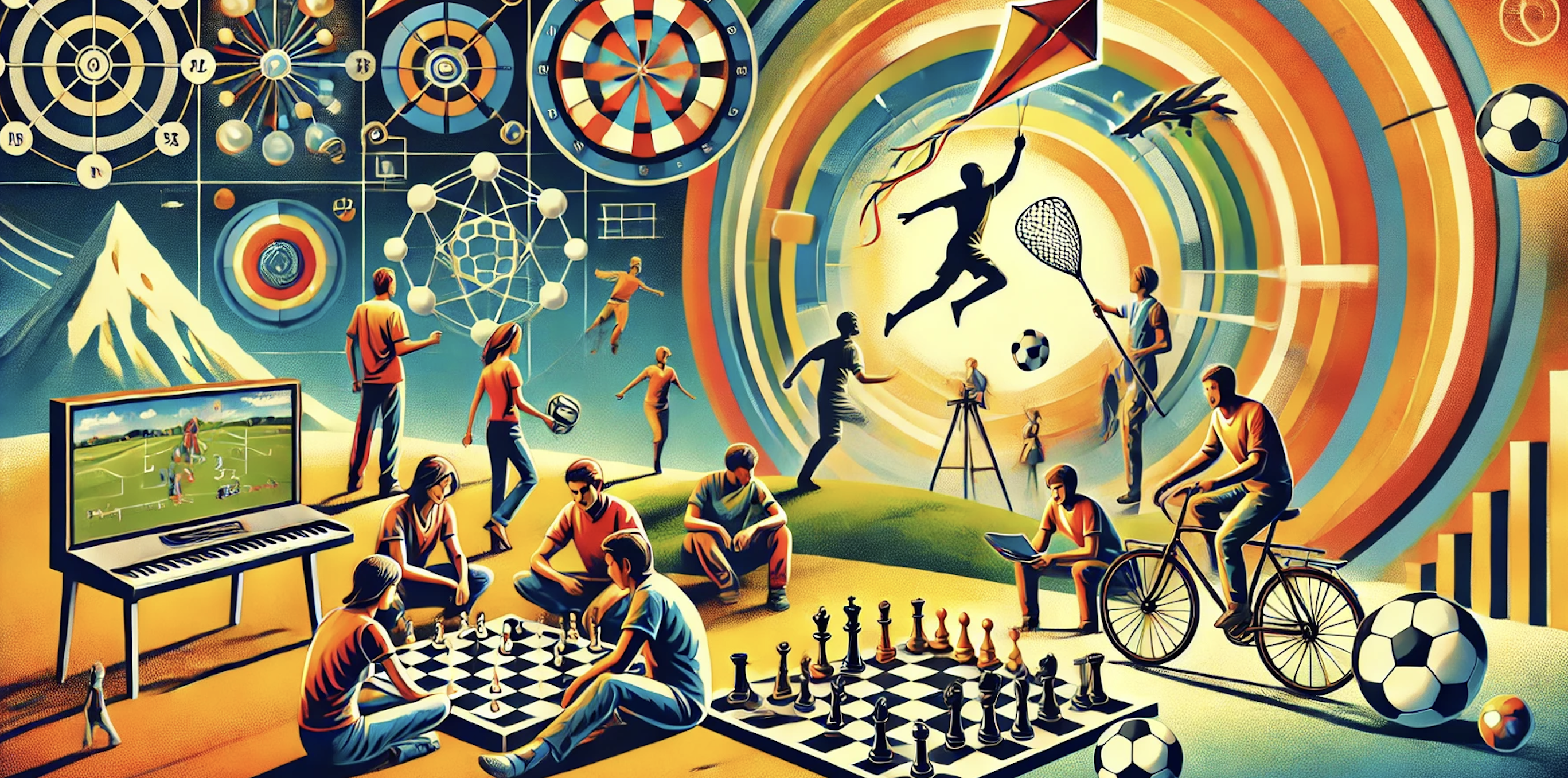
We’re figuring out that play is a lot more than just fun and games—it’s actually central to our development, creativity, and well-being. Dr. Stuart Brown, a leading researcher on play, argues that play is essential not just for children but for everyone1 – yes, even adults. According to Brown, play helps shape our brains, fuels our imagination, and fosters emotional resilience. When you think about it, the skills we build through play—problem-solving, collaboration, innovation—are exactly what we need in life and work.

For example, think about playing a complex video game. You’re learning strategies, adapting to new challenges, and making quick decisions. Now apply that to the workplace. You’re doing the same thing when solving a tricky problem with a team or coming up with a creative idea under pressure. The line between work and play blurs when you’re fully engaged in what you’re doing. That’s why people say, “If you love what you do, you’ll never work a day in your life.”
Play isn’t just for kids. Whether it’s gaming, sports, or even creative hobbies, play is a natural way to learn, reduce stress, and tap into our most innovative selves. So, don’t underestimate the power of play—it’s serious business for everyone. 🕹️🎨💡
Of course we can talk all day about the trillion-dollar gaming industry which is built on one concept: Play. It’s helpful to know a little bit about recent gaming industry history as well. I’m fascinated by this topic for a few reasons that come together for us here: I’m interested in media and culture for one, history for another, and the fact that I’ve lived through a few (not all) of these decades, all make this timeline investigation and discussion point really interesting to me. I hashed this out earlier and I think it’s a great conversation spark.

The images on this page were created with OpenAI image creator in ChatGPT o1 with a prompt about showing people engaged in all types of play.
1950s: The Birth of Computer Games
In the early 1950s, the first primitive computer games were developed. The most notable is “Tennis for Two” (1958) by physicist William Higinbotham, which used an oscilloscope display to simulate a tennis match. It’s considered one of the first interactive entertainment experiences using technology.
1960s: Early Experimentation
In the 1960s, computer-based games started emerging in academic settings. MIT’s “Spacewar!” (1962) was a pioneering multiplayer game, featuring two spaceships engaged in a dogfight. It was one of the earliest digital games widely distributed in computer labs, influencing future video game designers.
1970s: The Rise of Arcade and Home Consoles
The 1970s saw the rise of commercial video gaming, led by the release of arcade hits like “Pong” (1972) by Atari. The first home consoles, like the Magnavox Odyssey (1972), also appeared. This decade marked the start of the mainstream gaming industry and arcades’ cultural impact.
1980s: 👾 The Golden Age of Arcade Games
The 1980s were defined by iconic arcade games like “Pac-Man” (1980), “Donkey Kong” (1981), and “Space Invaders” (1978). Home consoles also gained popularity, with the release of the Nintendo Entertainment System (NES) in 1983, which revived the industry after the 1983 video game crash.
1990s: The 3D Revolution and PC Gaming
The 1990s saw the rise of 3D graphics and new genres like first-person shooters with “Doom” (1993). Sony’s PlayStation (1994) became a massive success, while PC gaming boomed with titles like “StarCraft” (1998) and “The Sims” (2000), leading to gaming’s expansion into mainstream culture.
2000s: Online Multiplayer and New Platforms
The 2000s ushered in the era of online multiplayer games like “World of Warcraft” (2004) and “Halo 2” (2004). Consoles like the PlayStation 2, Xbox, and Nintendo Wii broadened gaming’s appeal, while mobile games began gaining popularity, setting the stage for future industry trends.
2010s: The Rise of eSports, Streaming, and Indie
The 2010s saw massive growth in eSports, with games like “League of Legends” (2009) and “Fortnite” (2017) leading the charge. Streaming platforms like Twitch revolutionized how people consumed gaming content. Indie games, such as “Minecraft” (2011) and “Undertale” (2015), became cultural phenomena, proving smaller studios could create massive hits.
2020s: Cloud Gaming, VR, and the Metaverse
The 2020s have seen significant growth in cloud gaming with platforms like Google Stadia and Xbox Cloud Gaming, making high-quality games more accessible. Virtual reality (VR) continues to expand with devices like the Oculus Quest 2. The concept of the metaverse is emerging, blending gaming, social spaces, and virtual worlds into immersive, interconnected experiences, as seen in games like “Roblox” and “Fortnite.”
The Power of Play: Insights from Dr. Stuart Brown
Dr. Stuart Brown, a leading expert on the science of play, passionately argues that play is essential not just for children but for people of all ages. Through his TED Talk, “Play is more than fun”, and his book Play: How It Shapes the Brain, Opens the Imagination, and Invigorates the Soul, Brown emphasizes that play is as vital to our development and well-being as sleep or nutrition.
Why Play Matters
Brown’s research reveals that play is the cornerstone of creativity, social bonding, and emotional resilience. He defines play as an activity that is purposeless, voluntary, and inherently enjoyable—yet it has profound benefits. From evolutionary perspectives, animals engage in play to practice survival skills. Similarly, humans use play to develop empathy, solve problems, and innovate. Brown points out that a lack of play is often linked to issues like depression or rigid thinking.
The Brain on Play
One of Brown’s key arguments is that play stimulates brain growth and adaptability. He cites studies showing that playful interactions in youth help build the neural pathways necessary for complex thought, emotional regulation, and collaboration. Even for adults, engaging in playful activities—from playing video games to participating in sports—keeps the mind sharp and fosters creativity.
Modern Play and Its Evolution
Brown connects his theories to modern forms of play like videogames, cosplay, and digital storytelling. These activities, he argues, carry the same benefits as historical forms of play—such as ancient board games like Senet in Egypt or storytelling traditions in indigenous cultures. Whether designing strategies in Chess, solving puzzles in Minecraft, or playing a pick-up game of basketball, people tap into the same joy, camaraderie, and skill-building that have driven human evolution.
Lessons for Us All
For college students, kids, and adults of all ages, Brown’s ideas resonate strongly. Play isn’t just about fun; it’s about growth. Whether you’re building friendships through gaming, enhancing problem-solving skills in escape rooms, or even engaging in improv theater, play can boost your ability to navigate the challenges of modern life. It’s a reminder that making time for fun isn’t wasting time—it’s investing in your mental and emotional health.
Dr. Brown’s insights challenge us to rethink play not as a luxury but as a necessity—a bridge to a more fulfilled and connected life. So, as you juggle assignments, internships, and social commitments, remember to carve out time for play. It’s not just fun—it’s fundamental. 🕹️💡🎨👾
Resources
1.] Dr. Stuart Brown, TED Talk: “Play is more than fun”
2.] Play: How It Shapes the Brain, Opens the Imagination, and Invigorates the Soul
3.] Play Research: National Institute for Play (founded by Dr. Brown)